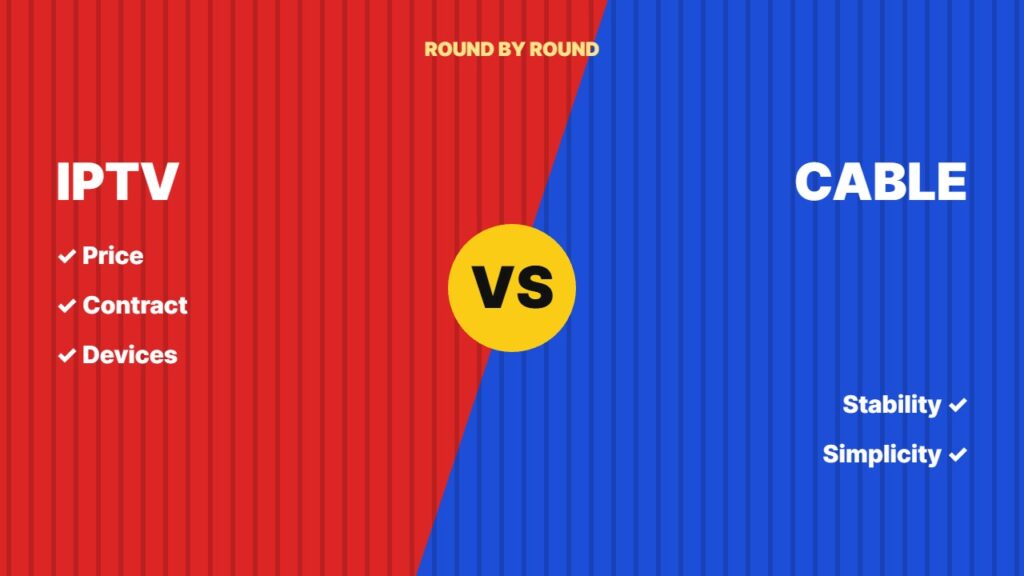
Thinking about cutting the cord? IPTV vs cable is one of the biggest questions for TV viewers in 2027. Both give you live channels, but they work very differently — in price, equipment, flexibility and reliability. Here is an honest comparison to help you choose.
What is the difference between IPTV and cable?
Cable TV sends channels through a coaxial cable to a set-top box from your cable company. IPTV sends the same kind of live TV over your internet connection to an app on a Firestick, smart TV, phone or computer. If you are new to it, start with what is IPTV.
IPTV vs cable: side-by-side
| IPTV | Cable | |
|---|---|---|
| Monthly cost | Usually lower | Usually higher, plus box fees |
| Contract | Often none — pay monthly or yearly | Often 12–24 months |
| Equipment | Your own device or a cheap stick | Rented box from the company |
| Watch on phone / laptop | Yes, on many devices | Limited to the provider’s app |
| Catch-up & VOD | Often included | Depends on the package |
| Needs internet | Yes — stable broadband | No (separate line) |
| Reliability | Depends on internet & provider | Very stable |
| Licensing | Depends — choose a licensed provider | Always licensed |
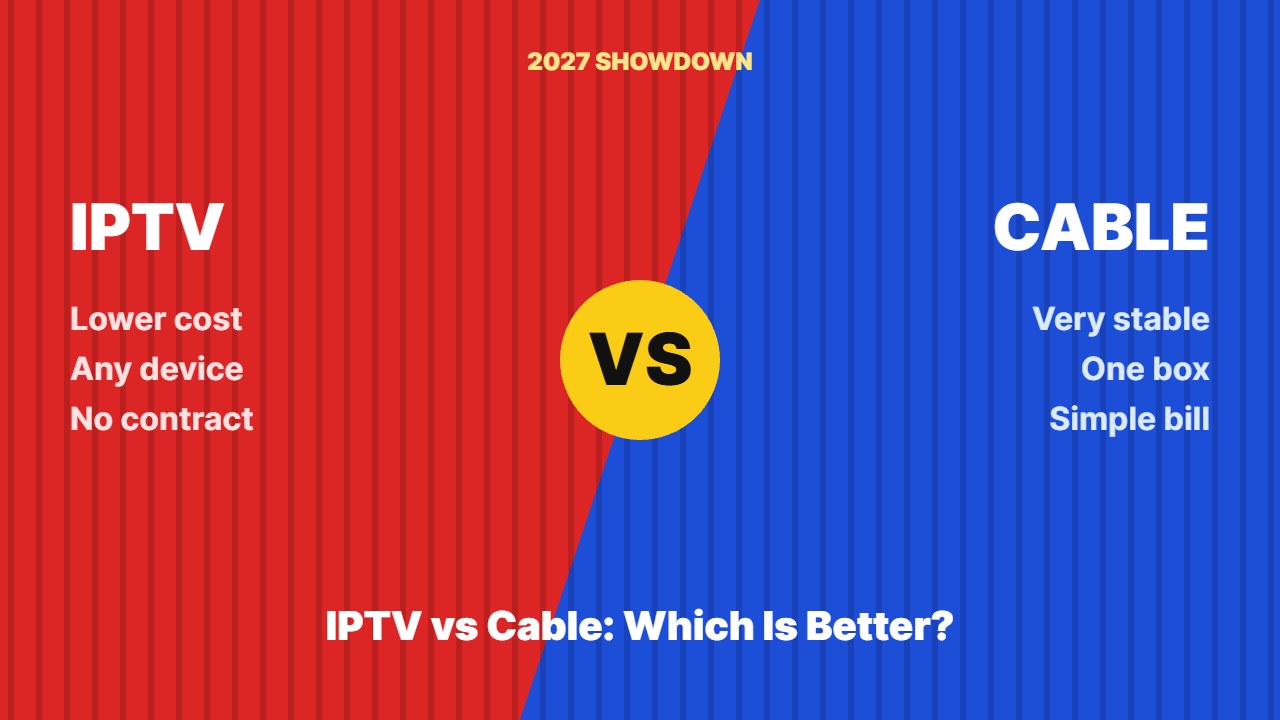
Advantages of IPTV
- Lower cost and flexible plans without long contracts.
- Any device: Firestick, Google TV, smart TVs, phones — see IPTV on multiple devices.
- Extra features: catch-up, VOD libraries and a full TV guide.
- Easy to try: many services offer a free trial.
Advantages of cable
- Very stable picture that does not depend on your Wi-Fi.
- Simple: one box, one remote, one bill.
- Always licensed content and official support.
- Local channels and regional sports are usually included.
Which one should you choose?
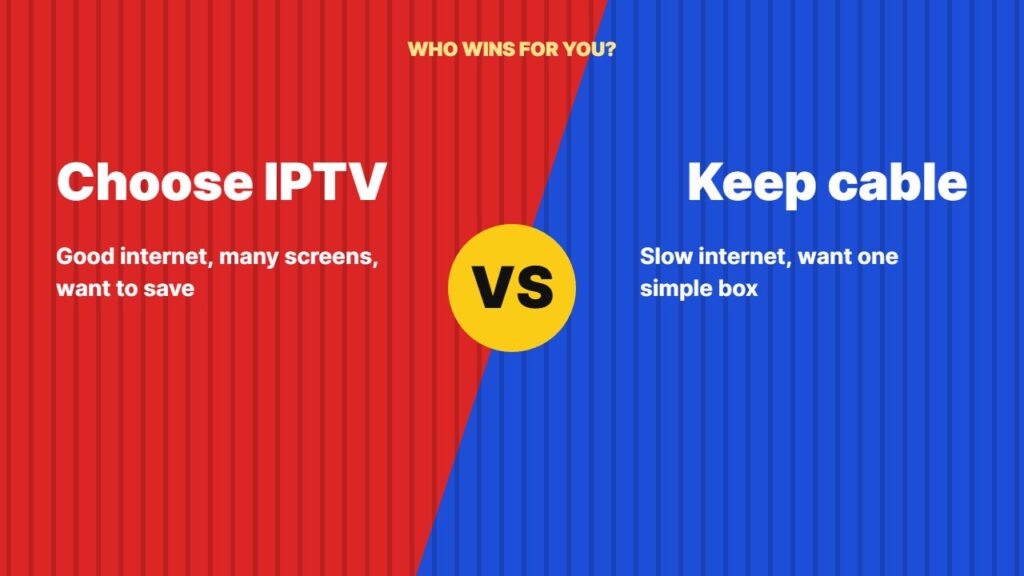
Choose IPTV if…
- You have stable internet of at least 25 Mbps — check our internet speed for IPTV guide.
- You want to watch on several devices and save money.
- You are comfortable installing an app.
Stay with cable if…
- Your internet is slow or unreliable.
- You want the simplest possible setup for older family members.
- You need a specific local channel that IPTV providers do not carry.
Not all IPTV services are legal. Choose a licensed provider, avoid deals that look too good to be true, and test with a free trial first.
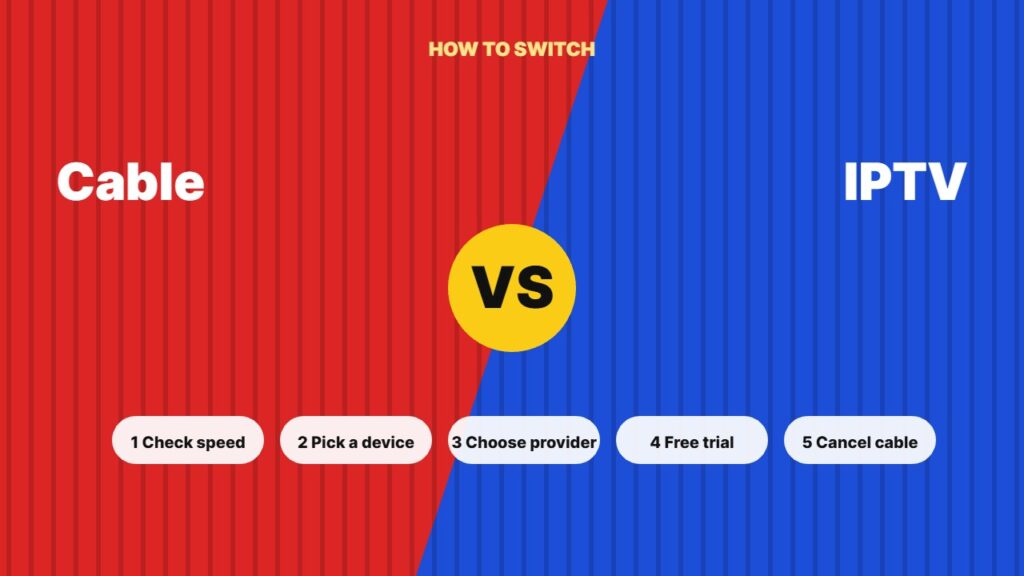
How to switch from cable to IPTV
- Check your internet speed and router — see the best router for streaming.
- Pick a device: best streaming device or your smart TV.
- Choose a provider using our IPTV provider checklist.
- Test it with an IPTV free trial during a big match.
- Only cancel cable once you are happy with the picture and channels.
Frequently asked questions
Is IPTV better than cable?
IPTV is usually cheaper and more flexible, while cable is more stable and simpler. With good internet and a licensed provider, IPTV is the better choice for most people.
Is IPTV cheaper than cable?
In most cases yes. IPTV plans usually cost less per month and need no rented box or long contract.
Does IPTV need internet?
Yes. IPTV streams over your broadband, so a stable connection of around 25 Mbps or more is recommended for HD and 4K.
Is IPTV legal?
IPTV technology is legal. What matters is the provider — use a service that holds the rights to the channels it offers.
Can I keep cable and IPTV together?
Yes. Many people try IPTV for a month alongside cable before cancelling, to be sure it works well at home.
Final thoughts
In the IPTV vs cable battle, IPTV wins on price, flexibility and features, while cable wins on stability and simplicity. If your internet is solid, a licensed IPTV service with a free trial is the easiest way to find out if you are ready to cut the cord.